


Does Porcelain Tile Need to Be Sealed? The Definitive Guide
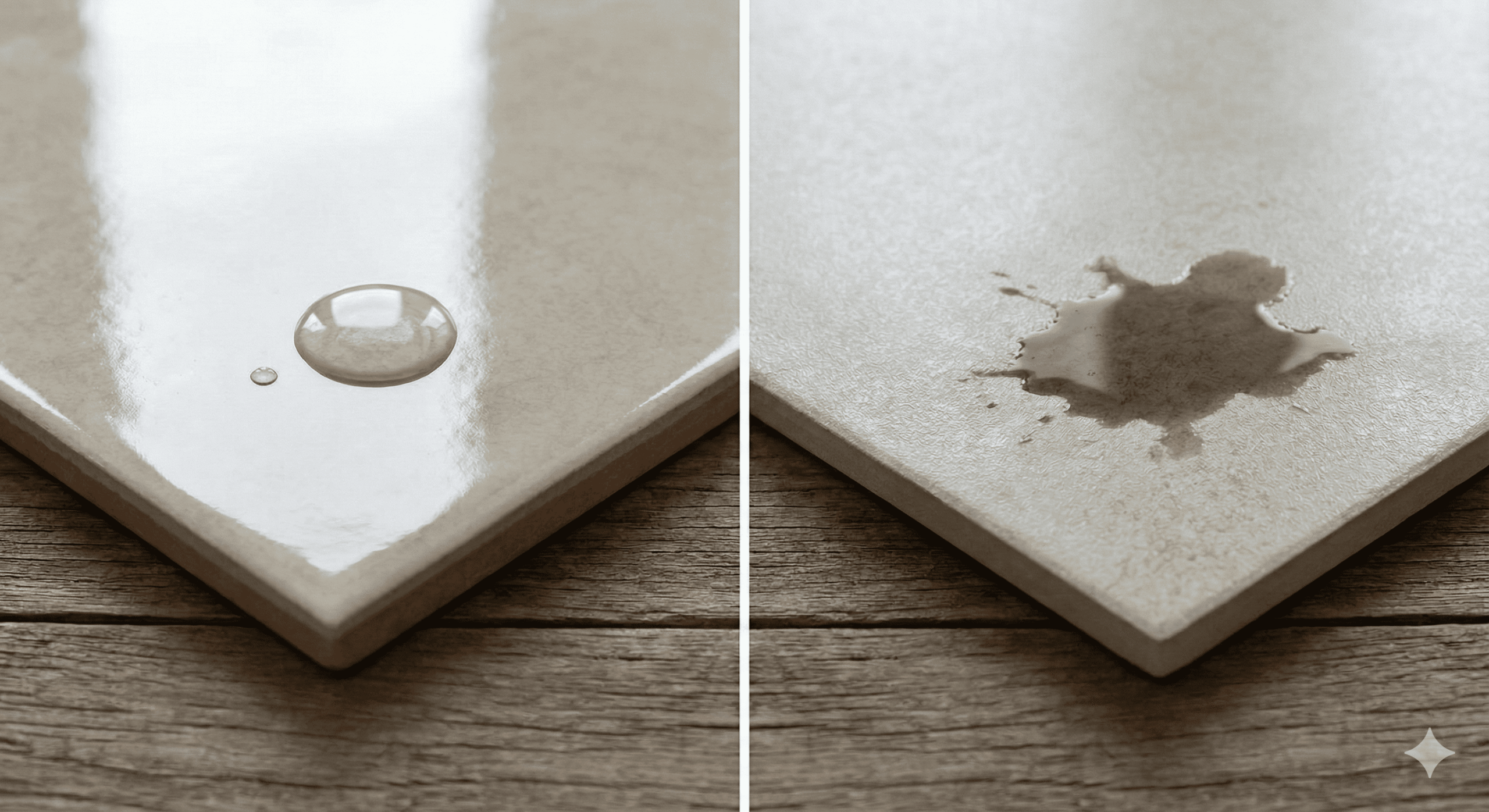
Table of content
If you have just installed a beautiful new porcelain floor or are considering it for your next renovation, you are likely asking the big maintenance question: “Does porcelain tile need to be sealed?”
The short answer is usually no, but with important exceptions. While most porcelain tile is naturally non-porous and stain-resistant, specific finishes and the grout lines between them often require extra attention.
Here is everything you need to know to keep your floors looking pristine, protect your investment, and minimize maintenance.
The Short Answer: It Depends on the Finish
Porcelain is a dense, hard type of ceramic that is fired at extremely high temperatures. This process generally makes it impervious to water. However, the finish of the tile dictates whether you need a sealer.
1. Glazed Porcelain Tile: No Sealing Required
The vast majority of porcelain tiles in residential homes are glazed. During manufacturing, a liquid glass coating is applied to the surface before firing.
- Why no sealer? The glaze creates an impenetrable barrier against moisture and stains. Sealing glazed tile is actually a bad idea because the sealer won’t absorb; it will sit on top, creating a hazy, sticky mess.
- Value Proposition: This is the ultimate “low maintenance” flooring option.
2. Unglazed / Matte Porcelain: Sometimes
Unglazed tiles do not have that protective coating. While they are still very dense, they are slightly more porous than glazed tiles.
- Recommendation: It is often recommended to apply a penetrating sealer to unglazed tiles in high-traffic or spill-prone areas (like kitchens) to prevent deep-set staining over time.
3. Polished Porcelain: Yes, Usually
This is the most common point of confusion. To get that mirror-like shine, manufacturers grind down the surface of the porcelain.
- The Issue: This grinding process opens up microscopic pores in the clay body.
- The Fix: Most high-quality polished porcelain comes pre-sealed from the factory. However, if yours didn’t (or if it’s been a few years), you must seal it. Without sealer, dirt can get trapped in those micro-pores, making the tile look permanently dingy.
Don’t Forget the Grout! (The Real Culprit)
Even if your porcelain tile doesn’t need sealing, your grout lines almost certainly do.
Standard cement-based grout is highly porous. It acts like a sponge for coffee spills, red wine, and muddy water.
- The Risk: If you don’t seal the grout, liquids will seep in, causing permanent discoloration and potentially weakening the grout structure.
- The Solution: Apply a high-quality grout sealer once a year, or use an epoxy grout (which does not require sealing) during installation.
Pro Tip: If water soaks into your grout and turns it a darker color, your sealer has worn off. If the water beads up on top, your grout is protected.
How to Test: Does My Tile Need Sealer?
If you aren’t sure what type of porcelain you have, you can perform a simple “Water Drop Test.”
- Clean a small, inconspicuous area of the tile.
- Pour a small amount (a teaspoon) of water onto the tile.
- Let it sit for 10 to 15 minutes.
- Wipe it away.
- Result A: If the area where the water sat is darker than the surrounding tile, the liquid was absorbed. You need to seal your tile.
- Result B: If the color remains exactly the same, your tile is impervious. Do not seal it.
The Value of Sealing: Why Bother?
If you determine that your specific tile (or grout) needs sealing, here is why it is worth the effort:
- Longevity: It prevents moisture from penetrating the subfloor or weakening the adhesive.
- Aesthetics: It keeps high-gloss finishes looking reflective and clean rather than cloudy.
- Hygiene: Sealing grout prevents mold and mildew from taking root in the porous cement lines.
- Ease of Cleaning: Sealed surfaces release dirt easily. Unsealed porous surfaces hold onto grime, requiring heavy scrubbing.
Summary Checklist
| Tile Type | Needs Sealing? | Notes |
| Glazed Porcelain | NO | Never seal glazed tile; it causes haze. |
| Polished Porcelain | YES | Check if pre-sealed by manufacturer first. |
| Unglazed/Through-Body | MAYBE | Recommended for high-traffic or wet areas. |
| Cement Grout | YES | Essential for stain prevention. |
| Epoxy Grout | NO | Naturally waterproof and stain-resistant. |
How Often Should Porcelain Tile Be Sealed?
| Surface Type | Sealing Frequency |
| Glazed Porcelain | Not required |
| Unglazed Porcelain | Every 3–5 years |
| Polished Porcelain | Every 3–5 years |
| Grout Lines | Every 1–2 years |
Common Myths About Sealing Porcelain Tile
❌ “All porcelain tile must be sealed”
✔️ False — only specific types benefit from sealing.
❌ “Sealing makes tile waterproof”
✔️ Tile is already water-resistant; sealing improves stain protection.
❌ “Sealers last forever”
✔️ Sealers wear down and need reapplication.